


The Real Power of Namola: Transforming Family Safety Beyond Emergencies
- Feb 16
- 3 min read
Most South Africans downloaded Namola for one simple reason: “Just in case.” The app’s emergency SOS button offers peace of mind when danger strikes. But the real strength of Namola lies beyond emergencies. It’s about everyday safety, connection, and shared awareness that help families stay coordinated and secure in a country where life moves fast and unpredictably.
In 2026, safety in South Africa is no longer about hiding behind walls or hoping for the best. It’s about visibility, participation, and communication. Communities in Johannesburg’s safest suburbs have shown how building systems of coordination can create real security. Your family can do the same with Namola.
Here’s how Namola helps you stay connected and informed long before anything goes wrong.
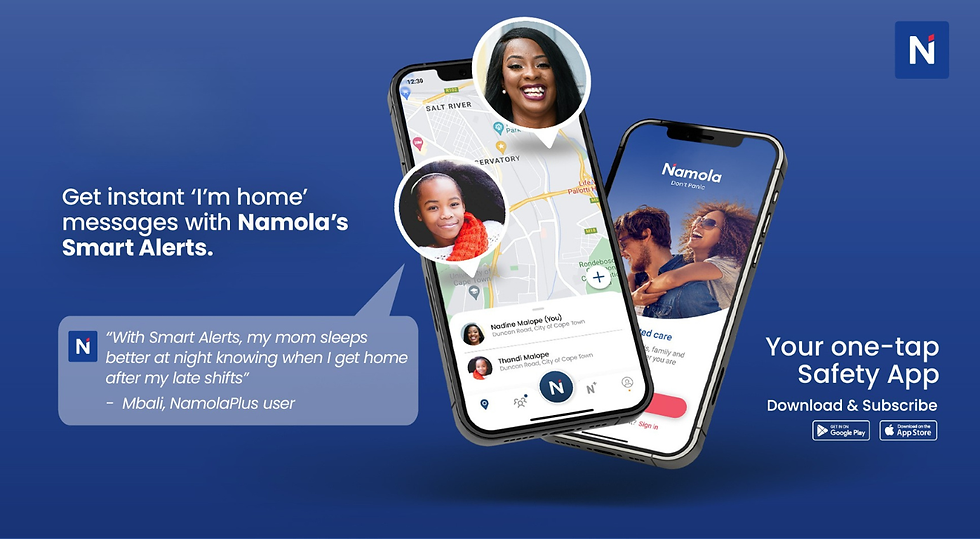
Why Family Tracking Matters in South Africa
Searches for terms like “family tracking app South Africa,” “how to track my child’s location,” and “location sharing for families” have grown steadily. This is not about paranoia. It reflects how modern life is spread out:
Teenagers take Ubers home from sports practice.
Partners travel between meetings across the city.
Parents walk dogs at dusk in quiet neighbourhoods.
Kids go on school trips or visit friends.
Life moves quickly, and uncertainty about loved ones’ whereabouts can cause stress. Real-time family visibility turns that uncertainty into clarity. It’s not about control or surveillance. It’s about coordination and peace of mind.
Real-Time Family Location Sharing
Namola allows you to see where your family members are at any moment. Once you connect with a family member through the app, you can:
View their current location on a map.
See if they are moving or stationary.
Check in without sending multiple messages.
Avoid arguments about “Where are you?”
Setting it up is simple:
Open Namola.
Add a family member.
They accept the invite.
Location sharing activates.
For families with teenagers or elderly parents, this feature often changes Namola from a “panic app” to a daily essential. Knowing where your loved ones are helps you plan pickups, coordinate schedules, and feel connected even when apart.
Travel History Shows Where They’ve Been
One of Namola’s most underused features is travel history. This lets you see where a family member has been over a selected period. Why is this useful?
If a phone goes missing or is stolen, you can track recent locations.
You can confirm if a child arrived safely at school or a friend’s house.
It helps spot unusual patterns that might need attention.
For example, if your teenager says they went straight home after school but travel history shows a detour, you can check in calmly and understand the situation better. This feature supports trust and communication rather than suspicion.
Shared Awareness Builds Safer Communities
Namola’s power extends beyond individual families. When neighbours and friends use the app, they create a network of shared awareness. This means:
Faster response times in emergencies.
Coordinated neighbourhood watch efforts.
Real-time alerts about incidents or suspicious activity.
Johannesburg’s safest suburbs have shown how community coordination reduces crime and builds confidence. Your family can contribute to this by staying connected through Namola and encouraging others to join.
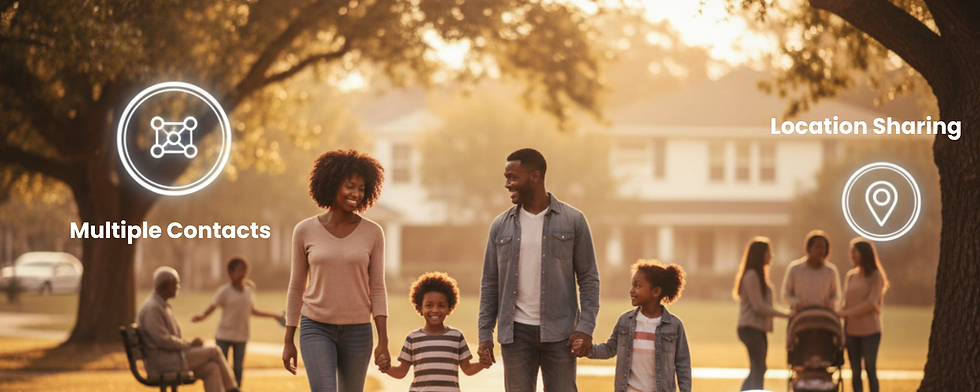
How to Make Namola Part of Your Family’s Daily Life
To get the most from Namola, consider these tips:
Invite all family members to connect and share locations.
Use check-ins to let others know you arrived safely.
Review travel history regularly to stay informed.
Encourage neighbours to join for stronger community safety.
Keep the app updated to access new features and improvements.
Namola is not just for emergencies. It’s a tool that helps families stay visible, informed, and connected every day.


This guide is very useful, especially for users who are planning for lto renewal. The explanation is simple and easy to understand.
Parents of a young athlete also shared their story, detailing how our orthotic therapy addressed their child’s flat feet. The customized orthotics keryFlex & onyfix not only alleviated discomfort during sports activities but also supported proper alignment, preventing further strain on growing joints.
This partnership allows us to address challenges proactively and deliver solutions that align with a company’s vision and objectives. Our ability to adapt to the evolving needs of our clients ensures that they payroll management remain well-equipped to tackle new opportunities and market demands as they arise.
Practical and timely safety tips for New Year’s Eve weekend. appreciates content that promotes https://angkorscape.com/ responsible celebration. Your advice encourages readers to plan ahead, stay alert, and ensure their festivities remain joyful, safe, and stress-free.
Practical and timely safety tips for celebrating New Year’s Eve responsibly. The guidance is clear and https://www.nutritist.us/ helpful for everyone. we encourage mindful celebrations that balance enjoyment with safety, ensuring memorable moments remain positive, healthy, and stress-free.